Buddhism, Hinduism, and Reiki Usui, although distinct in their origins and practices, share a deep connection through their focus on energy, healing, and spiritual growth. These three traditions emphasize the importance of cultivating inner peace, aligning with universal energy, and fostering compassion. By exploring the parallels between these spiritual paths, we can gain a deeper understanding of their shared principles and the unique ways they contribute to the quest for personal and collective enlightenment.
The Concept of Universal Energy
One of the most significant parallels between Buddhism, Hinduism, and Reiki Usui is the concept of universal energy, which forms the foundation of these spiritual traditions.
1. Hinduism: Prana as Life Force
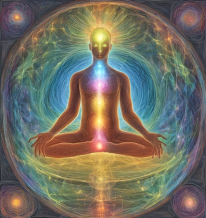
In Hinduism, the concept of prana is central. Prana, meaning „life force“ or „vital energy,“ is believed to flow through all living beings and the universe itself. This energy is carried by the breath and is responsible for life and vitality. Hindu practices such as yoga and pranayama (breath control) focus on balancing and enhancing the flow of prana to promote physical, mental, and spiritual well-being. The chakras, or energy centers within the body, are also fundamental to Hinduism, serving as focal points where prana is concentrated and distributed throughout the body.
2. Buddhism: The Flow of Energy and Mindfulness
While Buddhism does not explicitly use the term „prana,“ it shares a similar understanding of the importance of energy flow within the body and mind. In Buddhism, the practice of mindfulness and meditation is crucial for cultivating samadhi (concentration) and vipassana (insight). These practices help practitioners align with the flow of energy in the body, leading to the development of samatha (tranquility) and panna (wisdom). Buddhist teachings also highlight the importance of balancing the mind’s energies through ethical living, meditation, and wisdom, which ultimately leads to enlightenment or Nirvana.
3. Reiki Usui: Universal Life Energy
Reiki, particularly the Usui system, is founded on the belief in a universal life force energy known as ki (in Japanese, similar to prana in Hinduism and qi in Chinese philosophy). Reiki practitioners channel this energy through their hands to promote healing and balance within the body. The practice of Reiki involves attunement, where the practitioner is connected to the universal energy, allowing them to serve as a conduit for healing. The goal of Reiki is to remove blockages in the flow of energy, restore harmony, and support the body’s natural ability to heal itself.
Healing and Compassion
Another key parallel between these traditions is their emphasis on healing and compassion as central to spiritual practice.
1. Hinduism: Healing Through Devotion and Ritual
In Hinduism, healing is closely tied to devotion (bhakti) and ritual practices. Hindus believe that connecting with the divine through prayer, mantra chanting, and rituals can bring about physical, emotional, and spiritual healing. The act of devotion, especially in forms like seva (selfless service), is seen as a way to purify the heart and mind, promoting healing on all levels. Compassion, or karuna, is also a vital virtue in Hinduism, guiding individuals to act with kindness and empathy toward others, which in turn fosters spiritual growth.
2. Buddhism: The Path of Compassionate Healing
Buddhism places great emphasis on compassion (also karuna) as one of the essential qualities of an enlightened being. The Bodhisattva ideal in Mahayana Buddhism embodies the ultimate expression of compassion, where a practitioner vows to attain enlightenment not just for their own liberation but for the benefit of all sentient beings. Healing in Buddhism is often associated with the practice of loving-kindness (metta) and compassion meditation, where practitioners focus on generating and sending out positive, healing energy to themselves and others. This practice is believed to alleviate suffering and promote spiritual well-being.
3. Reiki Usui: Healing Through Compassionate Touch
Reiki is inherently a practice of compassionate healing. The very act of channeling universal life energy to heal oneself and others reflects a deep commitment to compassion. In Reiki, the practitioner’s intent is crucial; a healing session is most effective when conducted with a loving, compassionate heart. Reiki principles, such as „Just for today, I will be kind to all living things,“ echo the teachings of both Buddhism and Hinduism in their focus on compassion as a path to spiritual growth and healing.
Spiritual Growth and Enlightenment
The ultimate goal of Buddhism, Hinduism, and Reiki Usui is spiritual growth, leading to enlightenment, liberation, or a higher state of consciousness.
1. Hinduism: Moksha and Liberation
In Hinduism, the ultimate spiritual goal is moksha, or liberation from the cycle of birth, death, and rebirth (samsara). Moksha is achieved through self-realization and the dissolution of the ego, aligning oneself with the divine essence (atman), which is identical to the universal soul (Brahman). This process involves spiritual practices like meditation, yoga, and devotion, which purify the mind and lead to the realization of the oneness of all existence.
2. Buddhism: Nirvana and the Cessation of Suffering
Buddhism teaches that the ultimate goal is the attainment of Nirvana, a state of perfect peace and freedom from suffering. Nirvana is reached by following the Noble Eightfold Path, which includes right understanding, right intention, right speech, right action, right livelihood, right effort, right mindfulness, and right concentration. This path leads to the cessation of desire, the end of suffering, and the realization of the true nature of reality. In Buddhism, the dissolution of the ego and the cultivation of wisdom and compassion are essential for achieving enlightenment.
3. Reiki Usui: Spiritual Growth Through Energy Alignment
While Reiki is often viewed primarily as a healing modality, it also offers a path to spiritual growth and enlightenment. The practice of Reiki encourages self-reflection, mindfulness, and a deep connection with universal life energy. Through regular practice, Reiki practitioners aim to align their energy with the universal flow, leading to greater awareness, inner peace, and spiritual awakening. Reiki also teaches the importance of living in harmony with the principles of compassion, gratitude, and humility, which are vital for spiritual evolution.
Integration and Synthesis
Although Buddhism, Hinduism, and Reiki Usui have different origins and practices, they converge in their understanding of the importance of universal energy, healing, compassion, and spiritual growth. Each tradition offers unique insights and methods for connecting with the divine, healing oneself and others, and progressing on the path to enlightenment.
1. Shared Practices and Teachings:
The practices of meditation, mindfulness, and energy alignment are common threads that weave through all three traditions. Whether it’s through Hindu yoga, Buddhist meditation, or Reiki healing sessions, the focus is on achieving inner balance, clearing energy blockages, and aligning with the universal flow.
2. Compassion as a Universal Principle:
Compassion, a core tenet in Buddhism, Hinduism, and Reiki, serves as a universal principle guiding practitioners toward selflessness, healing, and spiritual growth. This shared emphasis on compassion highlights the interconnectedness of all beings and the importance of acting with kindness and empathy.
3. Spiritual Evolution and Enlightenment:
The ultimate goal of spiritual evolution—whether it is termed moksha, Nirvana, or spiritual awakening in Reiki—reflects the shared aspiration to transcend the ego, realize the true nature of reality, and achieve a state of oneness with the universe. This journey requires discipline, dedication, and a deep commitment to inner transformation.
Conclusion
Buddhism, Hinduism, and Reiki Usui, though distinct in their practices and cultural contexts, are deeply interconnected in their spiritual philosophies. They each emphasize the flow of universal energy, the importance of healing and compassion, and the pursuit of spiritual growth and enlightenment. By exploring these parallels, we can gain a deeper appreciation of the universal principles that guide these traditions and how they can be integrated into our lives to foster inner peace, healing, and spiritual fulfillment.