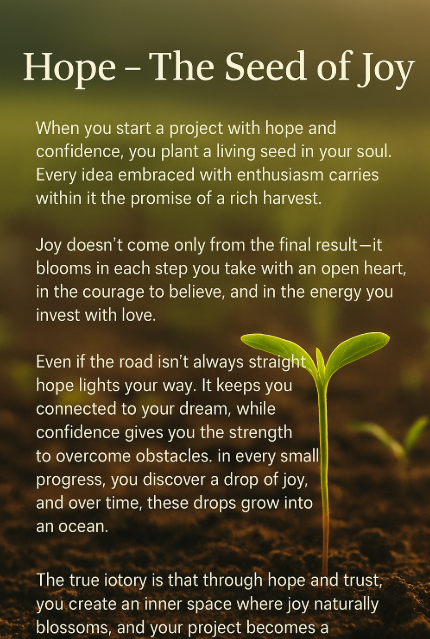
Hope isn’t wishful thinking; it’s the spark that turns an idea into movement. Trust isn’t blind faith; it’s the steady posture you hold when outcomes are still uncertain. Together they set a tone that doesn’t erase challenges, but transforms the journey into one that is meaningful—and quietly joyful.
Why the beginning shapes the story
The questions you ask at the start become your compass: Why am I doing this? Who does it serve? Who am I becoming as I build it? When your answers are honest, confidence stops depending on quick results and starts resting on integrity of direction.
Joy as a practice, not a prize
Joy isn’t only at the finish line. It appears:
-
in small wins (the first draft, the first client, the first kind review),
-
in clarity after mistakes,
-
in the right people who show up when your project has a heart.
If you postpone joy “until I succeed,” you’ll keep postponing it. Practice it now—or you won’t meet it later either.
Obstacles as feedback
When delays or criticism arrive, two switches change everything:
-
Curiosity over shame: What is this teaching me about the process?
-
Adjustment over paralysis: What can I try differently tomorrow?
In this way, hope becomes a method, not a fairy tale.
The circle that lifts you
Projects grow faster in shared light. Ask for and offer help. Say “thank you” often. Joy multiplies when you stop acting like a lone hero and build within a community of goodness.
Simple anchors for good days
-
Morning ritual (5 min): one sentence of intention + one small, clear action.
-
Deep work (90 min): one target only, then 5 minutes to celebrate progress.
-
Evening journal (3 lines): what worked, what I learned, the next step.
Boundaries and rest
Confidence thins when you say yes to everything. Joy wilts without rest. Say no to what doesn’t serve the vision, and treat rest as part of the project plan.
Beginning with hope and trust doesn’t promise perfection; it promises presence. And presence, practiced daily, becomes joy—not by accident, but as the natural echo of how you walk the path.