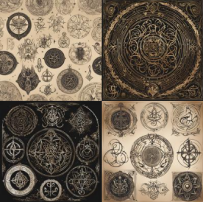
Mystical Sigils: An Exploration of Their Power and Purpose
Mystical sigils are potent symbols created for the purpose of manifesting specific desires, intentions, or energies in the material world. Rooted in ancient magical traditions, sigils are tools that bridge the gap between the conscious mind and the subconscious, enabling practitioners to influence reality through focused intention and symbolic representation.
Origins and History of Sigils
The use of sigils dates back to ancient times, with evidence of their use in various cultures and religious practices. In medieval Europe, sigils were commonly used in ceremonial magic, particularly within the practices of occultists and alchemists. They were often associated with the invocation of angels, demons, or other spiritual entities, each of which had its own specific sigil.
Historically, sigils were also linked to talismans and amulets, where the power of a specific symbol was believed to protect or empower the bearer. The word „sigil“ itself comes from the Latin sigillum, meaning „seal,“ and these symbols were often used as seals on documents or artifacts to denote power or authority.
The Creation of a Sigil
Creating a sigil involves a process that combines creativity, symbolism, and focused intent. The most common method for crafting a sigil follows these steps:
- Statement of Intent: The practitioner begins by formulating a clear, concise statement of intent, usually in the form of an affirmation or a wish. For example, „I am confident“ or „I attract prosperity.“
- Simplification: The statement is then condensed by removing vowels and repeating letters, leaving behind a string of unique consonants.
- Designing the Sigil: The remaining letters are creatively combined into a single, unique symbol. This design process is where the practitioner’s intuition and artistic sense come into play, as the goal is to create a symbol that resonates on a subconscious level.
- Charging the Sigil: Once the sigil is created, it must be „charged“ with energy. This can be done through meditation, visualization, or ritual practices. The idea is to focus intently on the sigil, imbuing it with the power of the practitioner’s intent.
- Releasing the Sigil: After charging, the sigil is typically released into the universe by forgetting its specific intent. The symbol is often destroyed (e.g., burned or buried) to symbolize the release of its power, though some traditions prefer to keep the sigil in a place where it can continue to influence the environment.
Types of Sigils
Sigils can vary widely in form and function, depending on the tradition and the practitioner’s goals. Some of the most common types include:
- Personal Sigils: Created to manifest specific personal desires or qualities, such as confidence, love, or success.
- Protective Sigils: Designed to guard against negative influences or energies, often incorporated into amulets or protective spaces.
- Invocational Sigils: Used to summon or connect with spiritual entities, such as angels, deities, or elementals.
- Banishing Sigils: Intended to dispel unwanted energies, entities, or influences from a person’s life or environment.
Mystical and Psychological Significance
On a mystical level, sigils are seen as keys to unlocking the deeper powers of the mind and the universe. They act as a form of symbolic language that can communicate directly with the subconscious, bypassing the logical, critical mind. This allows the practitioner to align their subconscious beliefs and desires with their conscious intentions, thereby making it easier to manifest their goals.
Psychologically, sigils can be understood as a form of autosuggestion or self-programming. By focusing on a sigil and charging it with intent, the practitioner effectively implants a suggestion into their subconscious mind. This can lead to changes in behavior, perception, and circumstances, as the subconscious begins to work towards the fulfillment of the sigil’s intent.
Modern Use of Sigils
In modern magical practices, particularly within chaos magic, sigils have gained renewed popularity due to their flexibility and effectiveness. Chaos magicians often emphasize the importance of personal belief in the process, asserting that the power of a sigil comes not from any inherent mystical property, but from the belief and intent of the practitioner.
Sigils are also widely used in various forms of witchcraft, neo-paganism, and new age spirituality, where they are adapted to fit a wide range of spiritual and practical purposes. The internet has further democratized the use of sigils, with many practitioners sharing their creations and methods online, allowing for a blending of traditional and contemporary approaches.
Conclusion
Mystical sigils are powerful tools that tap into the symbolic and subconscious aspects of the mind, allowing practitioners to influence their reality through focused intention and symbolic action. Whether viewed as a form of magical practice, psychological self-programming, or both, sigils offer a unique and flexible approach to manifesting desires and achieving personal transformation. As tools that bridge the mystical and the mundane, sigils continue to hold a significant place in the world of modern spirituality and magic.